Common inverter faults and what they mean
Most inverters show a fault code or a warning light. Look the code up in the manual before you call anyone. The usual culprits:
- Overload. Too many appliances at once, or a heavy load such as a kettle, iron or pump. Switch things off and reset.
- Battery low or undervoltage. The battery is flat, old or badly connected. Check the terminals for corrosion and loose cables.
- Over-temperature. The inverter is in a hot, closed space or its fan is blocked with dust.
- No solar input. A tripped DC breaker, a loose connector or a damaged cable on the roof.
- Grid or bypass faults. KPLC voltage swings that the inverter rejects.
Never open the inverter case yourself. Inverters hold dangerous voltages even when switched off.
Solar inverter repairs: repair or replace?
A good technician will test the inverter and tell you whether it is worth fixing. Fans, fuses, displays and some boards can be replaced. A burnt power stage on a cheap inverter often costs more to repair than the inverter is worth.
As a guide, a 3kVA hybrid inverter typically sells for about KSh 52,800 and a 5–6kVA one for about KSh 90,000 in the listings we checked, so compare any repair quote with the cost of a new unit. We found no published repair prices; ask for a diagnosis fee and a written estimate before work starts.
Repeated failures usually point to a cause outside the inverter: undersized cables, no surge protection, poor earthing, or an inverter too small for your loads. Fix the cause, or the new one will fail too. See solar inverters for sizing.
Solar panel cleaning
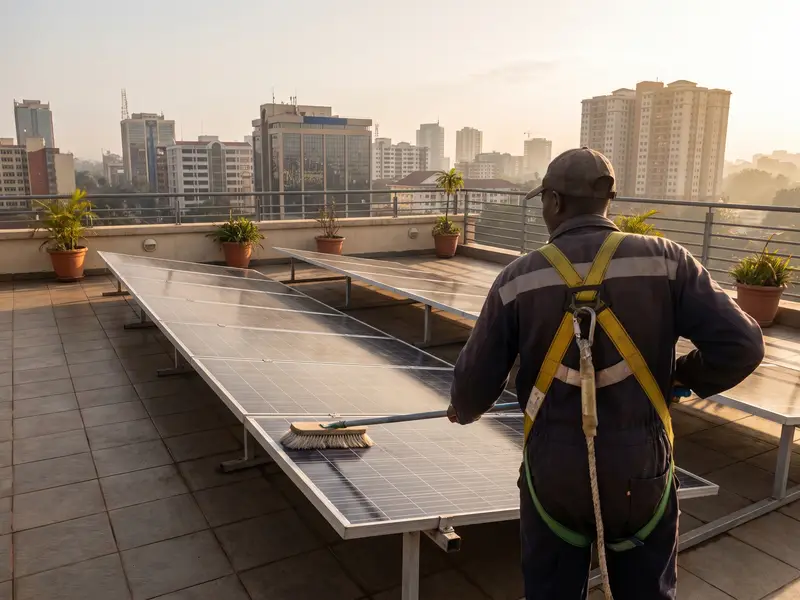
Dust, bird droppings and leaves cut a panel's output. In dry, dusty places or near busy roads, the loss can be noticeable within weeks.
- Clean with plain water and a soft brush or sponge. No detergents that leave residue, no scouring pads.
- Clean early in the morning or late in the afternoon, when the glass is cool. Cold water on hot glass can stress it.
- Do not use a pressure washer or walk on the panels.
- Stay safe on the roof. If the panels are hard to reach, hire a solar panel cleaning company or your installer.
Once a month to once a quarter is typical, depending on dust and rain. Watch your inverter's daily solar figure: a steady fall on clear days often means it is time to clean.
Solar battery maintenance
How you look after the battery depends on the type:
- Flooded lead-acid batteries need their water topped up with distilled water, clean terminals and a ventilated space.
- Sealed gel and AGM batteries are sold as maintenance free: no topping up. They still need clean, tight terminals and a cool spot. Maintenance free solar batteries in Kenya are still damaged by regular deep discharges.
- Lithium (LiFePO4) batteries have a built-in battery management system. Keep the firmware and inverter settings matched to the battery, and keep it out of the heat.
For every type: set the inverter's battery settings to the battery maker's values, avoid draining lead-acid batteries flat, and keep them out of direct sun. Read more in solar batteries.
Charge controller, pump and water heater repairs
- Solar charge controller repair. Common faults are a blown fuse, a burnt terminal or a battery voltage setting that does not match the battery. Cheap controllers are usually replaced rather than repaired.
- Solar pump repair. Low flow can mean a clogged inlet screen, a worn pump, a falling water level or dirty panels. A pump controller often shows fault codes for dry running or overload. Pulling a borehole pump needs proper equipment, so call the installer or a pump specialist.
- Solar heater repair. Leaks, broken vacuum tubes, a failed valve or scale build-up are the usual problems. EPRA's register for solar water heating contractors had no licensees listed when we checked, so ask any repairer for references.
A simple solar maintenance routine
- Weekly: glance at the inverter display for warnings and check the daily solar output.
- Monthly: look at the panels for dirt and shade from growing trees; check battery terminals.
- Every 6 to 12 months: have a technician check connections, breakers, earthing and battery health, and update inverter settings.
- After a storm or lightning: check that breakers and surge protectors have not tripped or failed.
Many installers offer service visits for systems they installed. If yours has closed or will not answer, our directory lists companies that offer repair and maintenance.