How solar installation for a home works, step by step
- Survey. The installer checks your KPLC bill, your appliances, the roof (direction, shade, condition) and where the inverter and batteries will go.
- Design and quote. They size the panels, inverter and battery and give you an itemised quote.
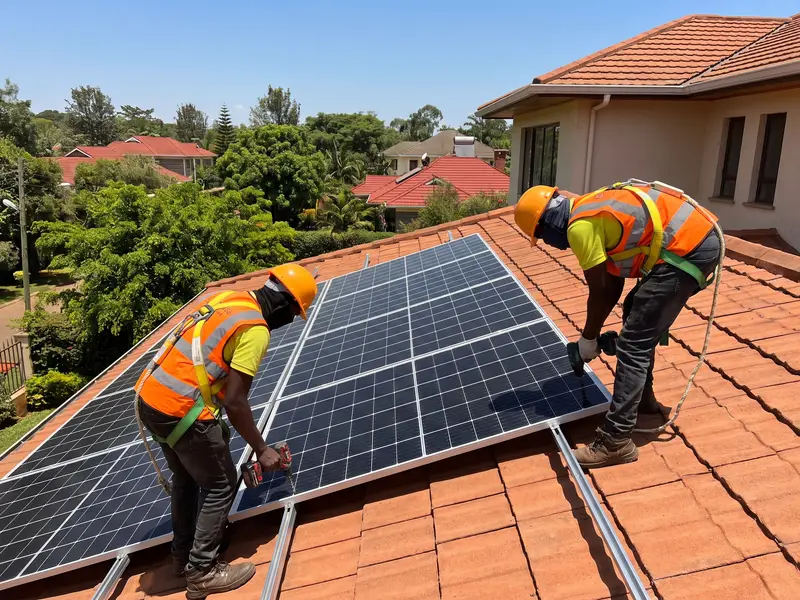
- Mounting. Rails are fixed to the roof structure, not just to the iron sheets, and sealed against leaks.
- Panels and DC wiring. Panels are fixed and wired in strings, with solar-rated cable, to a DC isolator and DC protection.
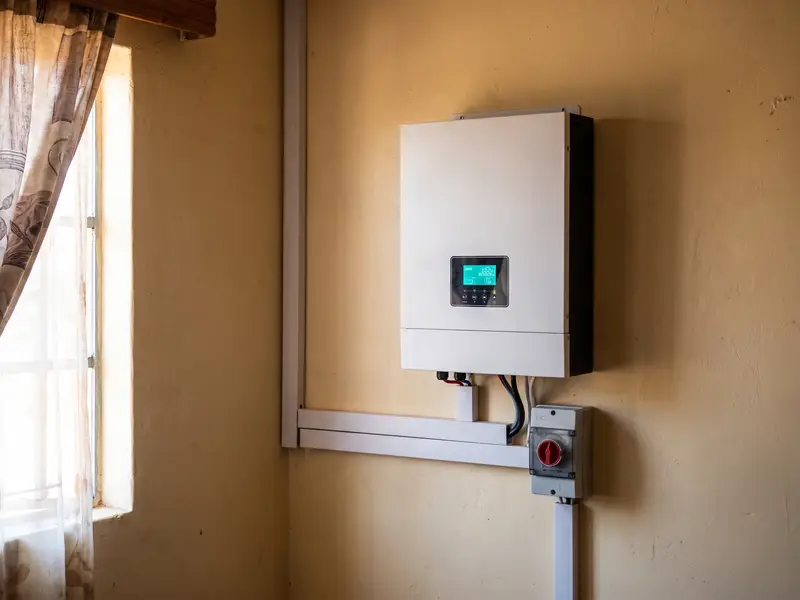
- Inverter and batteries. Mounted in a cool, ventilated, dry spot, with correctly sized battery cables and fuses.
- AC connection. The inverter is connected to your distribution board, with breakers and surge protection.
- Earthing and testing. Panels, frames and the inverter are earthed, and the system is tested before handover.
- Handover. You get a walk-through of the inverter display, the warranty papers and a contact for faults.
A typical home system is often installed in a day or two, depending on size and roof.
Choosing solar installation companies in Kenya
Kenya's solar regulations require solar PV installations to be done by an EPRA-licensed contractor. Before you hire installers of solar panels, check:
- The company's licence. A C1 (contractor) licence is the strongest installer credential. A V1 (vendor) licence also allows installation. A V2 licence on its own means an importer or manufacturer, which may not install.
- The technician's class. T1 covers small DC systems up to 100Wp, T2 medium systems with an inverter, and T3 advanced systems, including grid-connected and hybrid systems.
- Past work. Ask to see photos of finished installations, inside and out.
- A written, itemised quote and a written warranty on workmanship.
Every company on our directory shows whether we found it on the EPRA register. Browse solar companies in Kenya or read our guide to the EPRA solar licence.
What good solar panel installation looks like
Signs of a careful solar PV installation:
- Tilt and direction. Kenya sits on the equator, so panels are usually laid at a shallow tilt, often around 10 to 15 degrees, which also lets rain wash off the dust.
- No shade on the panels during the main sun hours.
- Solar-rated DC cable, neatly run in conduit and sized for the current, with proper MC4 connectors.
- DC and AC breakers, fuses and surge protection, clearly labelled.
- Earthing of the panel frames, mounting and inverter.
- Batteries on a stand, ventilated and away from direct sun.
EPRA requires licensed companies to have an earth loop impedance tester, an insulation resistance tester, an earth resistance tester and a clamp meter. Ask your installer to show you the test readings at handover. Our solar wiring diagram page shows how the parts connect.
Mistakes that cost you later
- Undersized cables, which heat up and waste power.
- Mixing different panels in one string, which drags all of them down to the weakest.
- Unprotected battery cables, a real fire risk.
- Drilling through iron sheets without sealing, which causes leaks.
- No earthing or surge protection, which leaves the system exposed to lightning.
- Overloading a small inverter with a kettle, iron or shower.
These are the faults that most often show up as repair calls later. See solar repair and maintenance.
Solar technician jobs and salaries in Kenya
If you want to work in solar installation, EPRA licenses technicians as individuals. T1 needs KCPE, an electrical trade test and basic solar training plus two years of experience. T2 needs KCSE, an electrical certificate or diploma and intermediate solar training. T3 needs a diploma with four years of experience, or a degree or HND with two.
We have no reliable data on solar technician salaries in Kenya; pay varies with the licence class, the employer and the town. See solar jobs and courses.