What it costs
| Size / type | Typical price | Range | Listings |
|---|---|---|---|
| 4G (SIM) solar camera | KSh 10,000 | 5,000 – 18,619 | 99 |
| WiFi/other solar camera | KSh 7,500 | 5,999 – 9,500 | 3 |
Camera with its small panel and built-in battery. The SIM card, data bundles and a memory card are usually extra. Prices from listings on Kenyan shops and marketplaces, checked October 2026. Listings with impossible specs are left out.
What a solar CCTV camera costs in Kenya
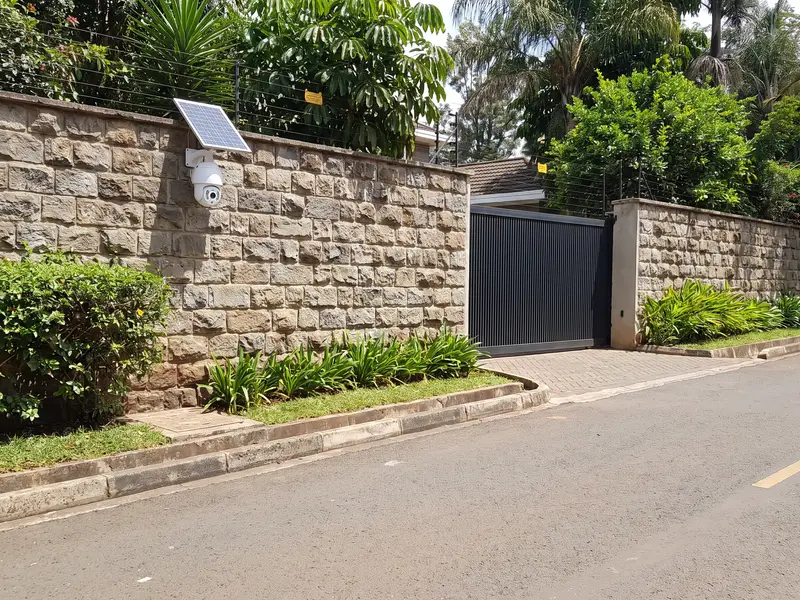
In the listings we checked, a 4G solar camera with a SIM card slot typically sells for about KSh 10,000, from about KSh 5,000 to KSh 18,600. Almost all were the V380 or Ubox type: a pan-and-tilt camera with a small panel and a battery, controlled from a phone app. Triple-lens models, which watch more than one direction, sat at the top of the range.
The few WiFi solar cameras we found were typically about KSh 7,500. We did not find enough Hikvision solar camera listings to give a price; branded systems like these are usually sold through security installers, so ask for a quote.
How a solar camera with a SIM card works
- The panel charges a battery inside or behind the camera during the day.
- The battery keeps the camera running at night. To save power, most cameras sleep and wake when their motion sensor sees something, then record and send you an alert.
- The 4G SIM connects the camera to the internet through the mobile network, so you can watch live on your phone from anywhere.
- Recording goes to a memory card in the camera, to a paid cloud plan, or both.
You need good mobile network coverage at the camera's spot, and a data bundle on the SIM. Live viewing uses far more data than motion alerts. If you have WiFi that reaches the camera, a WiFi model avoids the bundle.
What to check before you buy
- Panel and battery size. A bigger panel and battery keep the camera running through cloudy days.
- Recording mode. Most solar cameras record on motion, not around the clock. Check whether that is enough for you.
- Night vision. Infrared for black and white at night, or colour night vision with a light.
- Water and dust rating. IP65 or IP66 for an outside pole.
- Network. Check which SIM networks the camera supports, and test the signal at the spot.
- App and support. A camera is only as good as the app you use it from.
Mount the camera high, at 3 metres or more, with the panel in full sun and the camera out of easy reach. Light the area at night with a solar security light for clearer pictures.
Where solar cameras make sense
- Farms and shambas far from the house, where running cable is costly.
- Construction sites, for a few months, then moved on.
- Gates and boundaries of large compounds.
- Rental plots and stores you want to check from town.
For a home or business that already has power, wired cameras with a recorder (NVR) are usually more reliable and record all the time. You can still run them on solar: an installer can add the cameras to a home solar system with a proper battery. See solar batteries.
Pair cameras with lights and a fence
A camera records what happens. Lights and a fence help stop it happening. Most homes and farms are better served by a combination:
- Solar flood lights to light the area the camera watches.
- Solar security lights at doors and the gate.
- A solar electric fence on the boundary.
One installer can quote for all of them together and power them from one system. If you only want one or two cameras for a gate or a shamba, a standalone 4G solar camera is the quickest start, and you can add lights later.