What it costs
| Size / type | Typical price | Range |
|---|---|---|
| flood <=60W | KSh 3,750 | 619 – 12,500 |
| wall/sensor/security lights | KSh 3,050 | 482 – 8,500 |
Wattages are as listed by sellers and are marketing figures, not real LED power. Prices are approximate and vary by brand and seller.
What solar security lights cost in Kenya
A solar wall, sensor or security light typically sells for about KSh 3,000, from under KSh 500 for a small wall light to about KSh 8,500. Small flood-style security lights listed as 60W or less were typically a little more, about KSh 3,750.
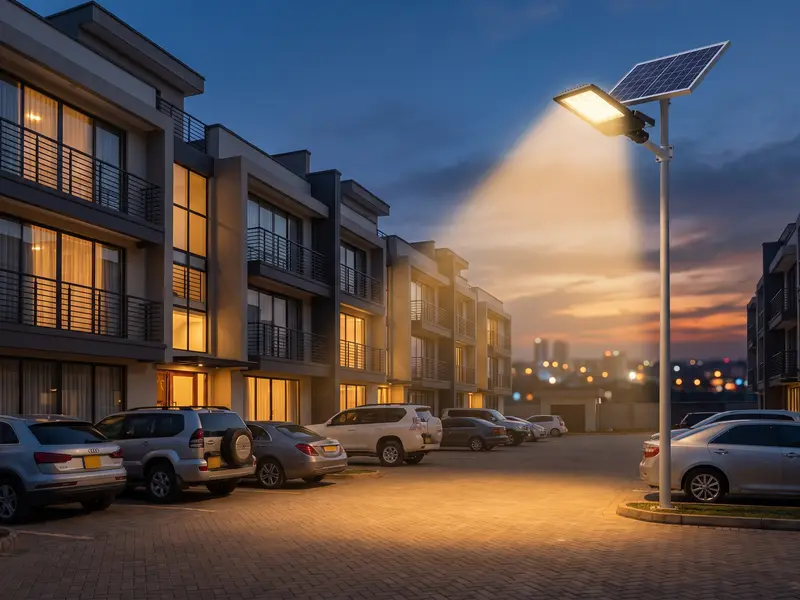
The cheapest lights are small and dim: fine for a doorway, not for a whole compound. If you need to light a large area, see solar flood lights.
Some home lighting kits include one. Sun King's HomePlus Max kit, for example, comes with a 100-lumen motion security lamp alongside its indoor lights, for about KSh 20,000 upfront.
How solar motion sensor lights work
A small panel charges a battery during the day. At dusk, a light sensor wakes the lamp. A PIR motion sensor then watches for body heat moving in front of it.
Most lights offer three modes:
- Off, bright on motion. Saves the most battery. Good for back doors and side paths.
- Dim, bright on motion. A low glow all night, full light when someone comes. Good for gates and front doors.
- Always on. Uses the battery fastest. Small lights often fade before dawn in this mode.
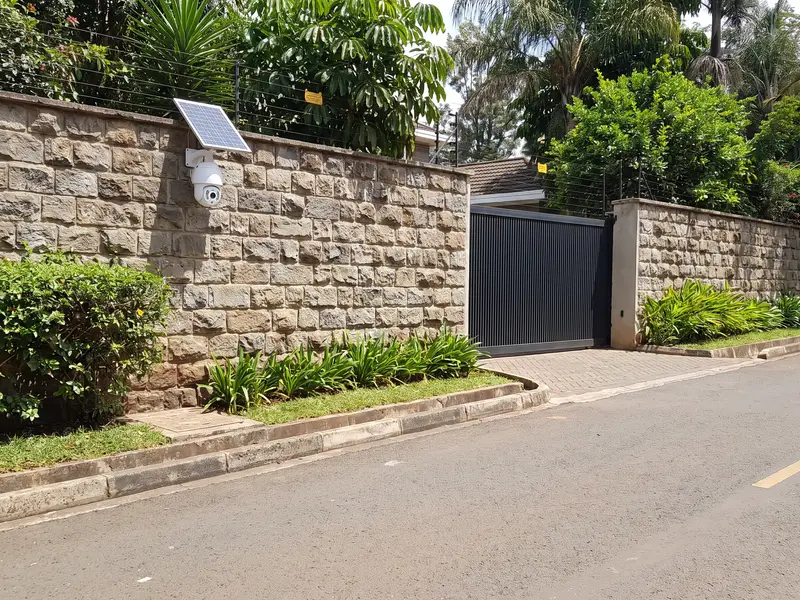
The sudden light warns you and tells an intruder they have been seen. For more than a warning, pair the light with a solar CCTV camera pointed at the same spot.
Where to mount a security light
- Height. About 2.5–3 metres. Lower and the light is easy to steal or break; much higher and the sensor misses people.
- Facing the approach. PIR sensors catch movement across their view better than movement straight towards them. Point the light along the path, not straight down it.
- Sun on the panel. Under a deep roof overhang the panel gets little sun. A split model with the panel on a cable solves this.
- Away from trees and washing lines. Moving branches and clothes can set off the sensor all night.
The best solar security lights with motion sensor: what to check
The same warning applies as for flood lights: the watts on cheap solar lights are marketing figures. A small sensor light with a palm-sized panel cannot be the "100W" its box says. Compare these instead:
- Lumens, the real brightness.
- Battery capacity in mAh or Wh, and whether it is lithium.
- Sensor range and angle, for example 5–8 metres and 120 degrees.
- Water rating: IP65 or better for an outside wall.
- Warranty, and a seller you can find again.
A light with a bigger panel and battery will still work after three cloudy days. A cheap one may not.
Security lights for shops, plots and farms
Security lights are not only for homes. Shop owners use them over doors and shutters, landlords along the corridors of rental plots, and farmers over stores, cattle pens and poultry houses. In each case the same rules apply: a sensor light where people come and go, a bigger light where you need to see a whole area, and panels in full sun.
For a plot with many doors, one installer fitting matching lights is usually cheaper and tidier than buying them one by one.
Building a full security setup
Lights work best as one layer of several:
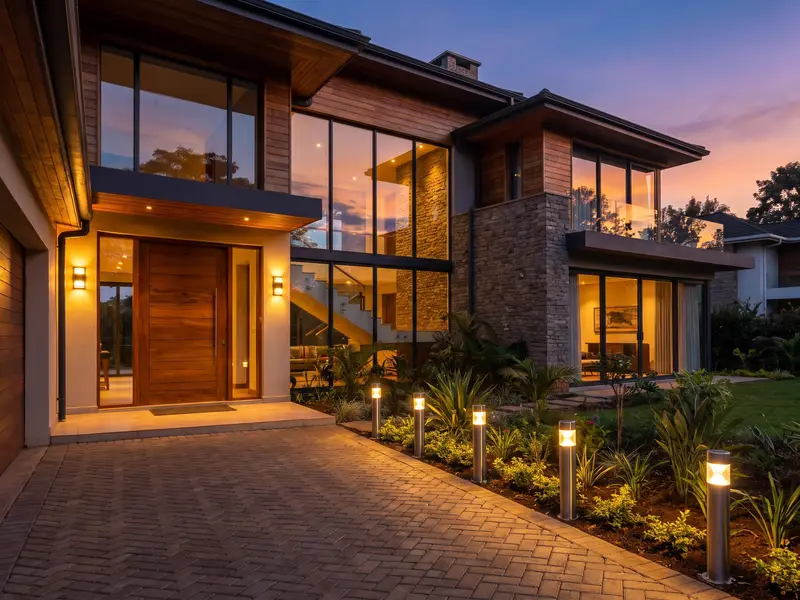
- Lights at the gate, doors and dark corners.
- Cameras to record what happens. See solar CCTV cameras.
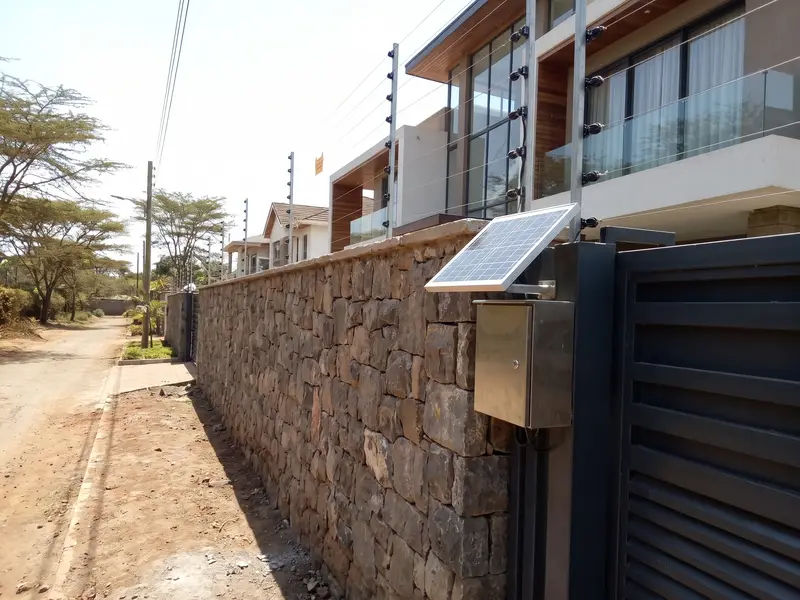
- A fence to keep people out. See solar electric fences.
An installer can power all three from one solar system with a proper battery, which is more reliable than many separate small batteries. Ask for one quote covering the lot.