What it costs
| Size / type | Typical price | Range |
|---|---|---|
| lithium ~1.3kWh (12V 100Ah) | KSh 25,599 | 22,999 – 104,055 |
| lithium ~2.5kWh | KSh 41,899 | 34,999 – 199,500 |
| lithium 3.3-3.8kWh | KSh 59,045 | 41,500 – 195,000 |
| lithium ~5kWh | KSh 110,000 | 73,000 – 460,000 |
| lithium ~7.7kWh | KSh 189,999 | 148,000 – 425,500 |
| lithium ~10kWh | KSh 195,000 | 110,000 – 631,900 |
| lithium 15-16kWh | KSh 277,250 | 227,450 – 851,900 |
Prices are approximate and vary by brand and seller.
Why choose a lithium solar battery
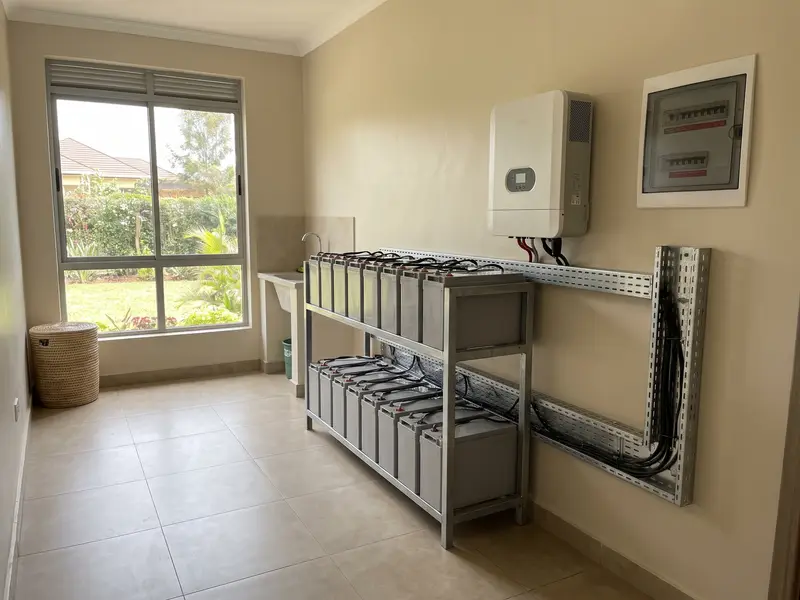
Lithium ion batteries for solar panels have become the default for new home and business systems in Kenya. Compared with gel or lead-acid:
- More usable energy. You can safely use most of a lithium battery's capacity each night. With lead-acid you should stop at about half.
- Longer life. LiFePO4 cells are rated for many more charge and discharge cycles than lead-acid.
- Lighter and smaller. A 5kWh lithium pack is a fraction of the weight of the lead-acid bank that does the same job.
- Faster charging. Lithium accepts charge quickly, so it fills up in a short sunny spell.
The trade-off is price. A lithium solar battery costs more at the start, and it needs a compatible inverter or charge controller.
LiFePO4 is the type to buy
Almost all lithium batteries sold for solar in Kenya use lithium iron phosphate, written LiFePO4 or LFP. It is the safest and longest-lasting lithium chemistry for storage. Other lithium ion types, the ones used in phones and laptops, are rarely sold for home solar and are less suited to it.
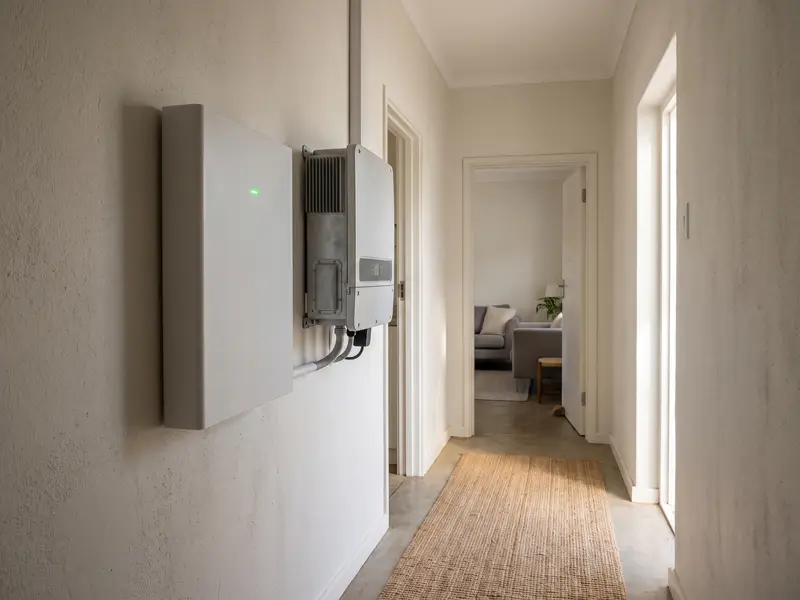
A good LiFePO4 battery for a solar system has a built-in battery management system (BMS) that protects the cells from over-charge, deep discharge and high temperature. Bigger packs can also talk to the inverter over a communication cable, so the inverter knows exactly how full the battery is. Ask the installer to confirm the battery and inverter are listed as compatible.
Sizes: 12V, 24V and 48V
Lithium solar batteries are sold by voltage and capacity. The energy stored is volts times amp-hours:
- 12V 100Ah (about 1.3kWh). A drop-in replacement for a 12V gel battery in small systems.
- 24V 100Ah (about 2.5kWh). For 24V inverters of about 1kVA to 3kVA.
- 48V 100Ah (about 5kWh). The usual home battery for 3kVA to 6kVA hybrid inverters.
- 48V 200Ah (about 10kWh). For larger homes, or two 5kWh packs side by side.
Choose the voltage your inverter uses first, then the capacity. Many 48V packs can be added to later, so you can start with one and add another when you can afford it. Hybrid solar inverters explains the inverters these batteries are paired with.
Lithium solar batteries price in Kenya
Approximate prices:
- 12V 100Ah (about 1.3kWh): typically about KSh 25,600
- About 2.5kWh: typically about KSh 42,000
- About 3.3 to 3.8kWh: typically about KSh 59,000
- About 5kWh: typically about KSh 110,000, with many between about KSh 85,000 and KSh 130,000
- About 10kWh: typically about KSh 195,000
Brand and warranty explain most of the spread. Compare these with gel and lead-acid prices on our solar battery prices page.
When lithium pays off, and when it does not
Lithium is usually worth it if:
- you use the battery every night, not only during blackouts;
- you want to run a fridge, pump or other heavy loads after dark;
- you have little space, or the battery must sit indoors.
A gel or tubular battery can still make sense for a small lighting system, or as standby backup that rarely discharges.
Before you buy, ask the seller for the datasheet: the cycle life and the depth of discharge it was measured at, the warranty in years, and whether the warranty is honoured in Kenya. See solar batteries for the full comparison, or home solar systems for how a battery fits a whole-house setup.