The route to becoming a licensed solar technician
In Kenya, solar PV technicians are licensed by EPRA in three classes. The training and experience you need depend on the class:
- Class T1 (basic): small systems or a single-battery DC system up to 100 Wp. You need KCPE, Electrical Government Trade Test 2 and basic solar training, plus 2 years of verifiable solar installation experience.
- Class T2 (intermediate): medium systems or multiple batteries, which may include an inverter. You need KCSE, a certificate or diploma in electrical or electronics and intermediate solar training, plus 2–4 years of experience.
- Class T3 (advanced): advanced systems, including grid-connected and hybrid. You need a diploma with 4 years of experience, or a BSc or HND with 2 years.
The class matters for employers too: a company needs a T3 technician to hold a C1 contractor licence, and a T2 technician for V1 or V2. Our EPRA solar licence guide lists the fees.
Kinds of solar courses in Kenya
Solar training institutions in Kenya offer several levels of course:
- Short basic courses in solar PV installation: panels, charge controllers, batteries and simple DC systems. These suit the basic solar training needed for T1.
- Intermediate courses covering inverters, battery banks, system sizing and AC wiring, for T2.
- Advanced courses on grid-tied and hybrid design, commercial systems and solar water pumping, for T3 candidates.
- Certificates and diplomas in electrical or electronic engineering at technical and vocational colleges. These are the formal qualifications T2 and T3 build on.
- Degree programmes in electrical or renewable energy engineering for design and engineering roles.
- Solar water heating courses for the separate SHW1 and SHW2 worker licences under the 2025 solar water heating regulations.
Before you pay, ask the institution three things: which EPRA licence class the course prepares you for, how much hands-on installation time it includes, and whether the certificate is accepted in EPRA licence applications.
What a good installation course teaches
Look for a course that covers, with practical work:
- How PV works, and the parts of a system.
- Load assessment and sizing, the method in our solar calculator.
- Series and parallel wiring of panels and batteries, as in our solar wiring diagram guide.
- Protection: fuses, breakers, isolators, surge protection and earthing.
- Testing with the instruments EPRA inspects for: insulation resistance tester, earth resistance tester, earth loop impedance tester and clamp meter.
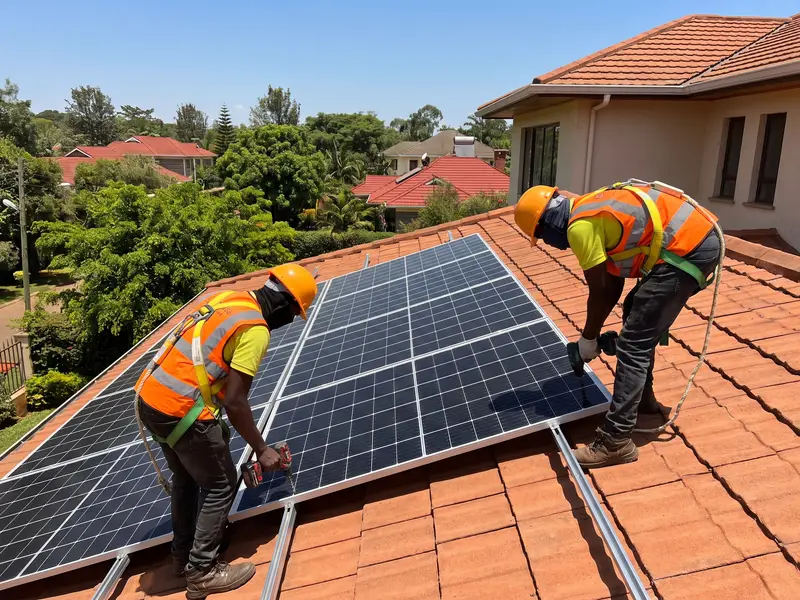
- Mounting, roof work and working safely at height.
- Commissioning, handover and fault-finding.
Free "solar installation notes PDF" downloads can help you revise, but they do not replace hands-on training or count as experience for a licence.
Solar technician jobs in Kenya
Solar energy jobs in Kenya fall into a few groups:
- Installer and technician: fitting home, commercial and pump systems for contractors and vendors.
- Design and sales engineer: sizing systems and preparing quotes, usually needing a diploma or degree.
- Pay-as-you-go field agent: selling and servicing kits for brands that still sell solar on instalments. M-KOPA no longer sells solar in Kenya, so look at other brands for this kind of work.
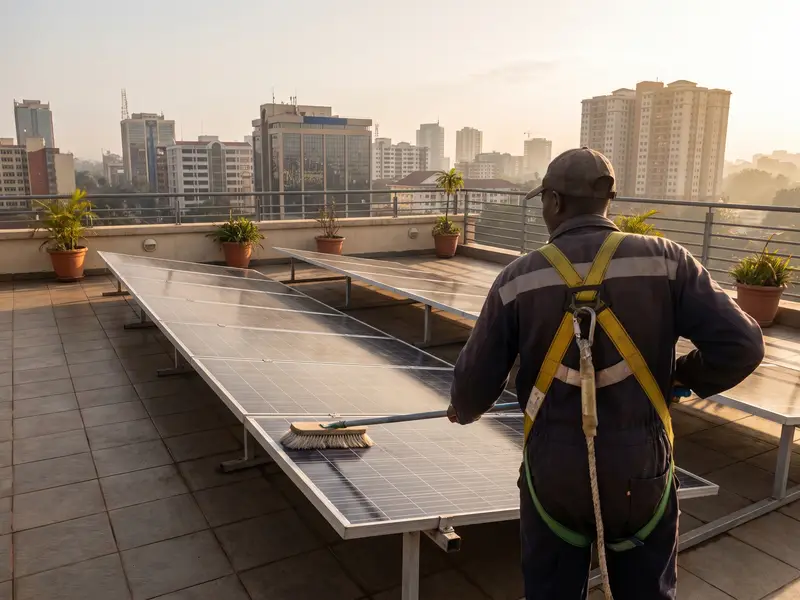
- Operations and maintenance: cleaning, testing and repairing systems on commercial sites and solar farms.
- Self-employed installer: once you hold a licence, you can work under a licensed company or build your own.
Experience counts towards every licence class, so many people start as an assistant to a licensed technician. Look at the companies on this directory, many of which hire, and read how a good solar installation is done.
Already licensed? Get work through this directory
If you run a licensed solar company, you can list it on this directory. We match listings against the EPRA register and pass quote requests from homeowners, farmers and businesses to up to 3 licensed installers who work in the area.