What it costs
| Size / type | Typical price | Range |
|---|---|---|
| DC surface/booster pumps (12-24V) | KSh 22,555 | 4,799 – 99,000 |
| DC submersible ~250-300W kit (with panel) | KSh 18,999 | 14,724 – 72,300 |
| DC submersible ~250-300W, pump only | KSh 9,400 | 5,499 – 45,000 |
| submersible 370-800W | KSh 37,995 | 14,500 – 164,000 |
| submersible 1-2.2kW | KSh 87,500 | 29,990 – 505,000 |
| Dayliff solar pumps | KSh 58,000 | 13,590 – 199,800 |
| Lorentz PS pump systems (pump+controller) | KSh 195,300 | 64,125 – 989,888 |
| solar pumping inverters (VFD) | KSh 101,750 | 29,900 – 745,000 |
| submersible (power not stated) | KSh 13,999 | 5,499 – 78,999 |
Most pump prices exclude panels, pipes, drip lines and installation. Prices are approximate and vary by brand and seller.
How solar irrigation works
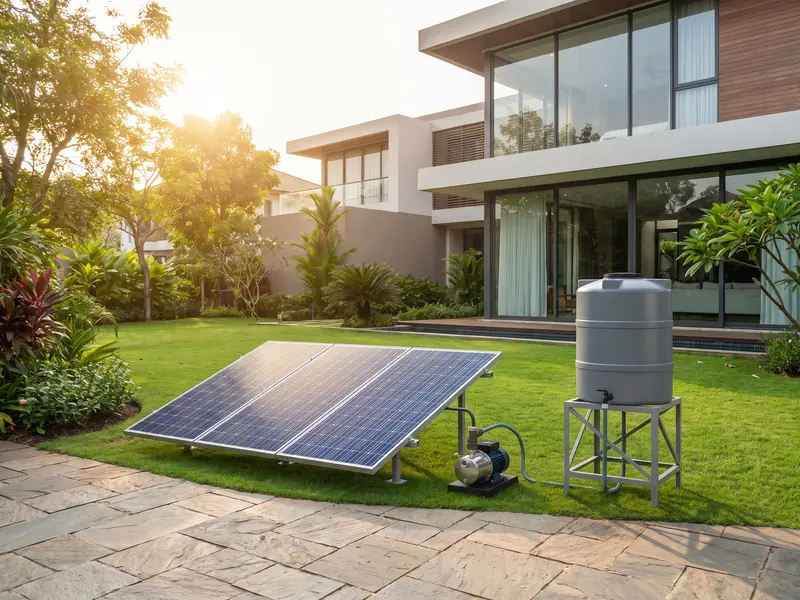
A solar irrigation system has three parts: a pump powered by solar panels, a way to store water (usually a raised tank or a farm pond), and a way to deliver it to the crops (drip lines, sprinklers or a hose). The pump runs during the day, when crops need water most and the sun is strongest. Pumping into a tank lets you irrigate by gravity in the early morning or evening and keeps water in reserve for cloudy days.
Compared with a diesel pump, there is no fuel to buy or carry, and far less to service. The cost is mostly upfront.
Choosing a solar water pump for irrigation in Kenya
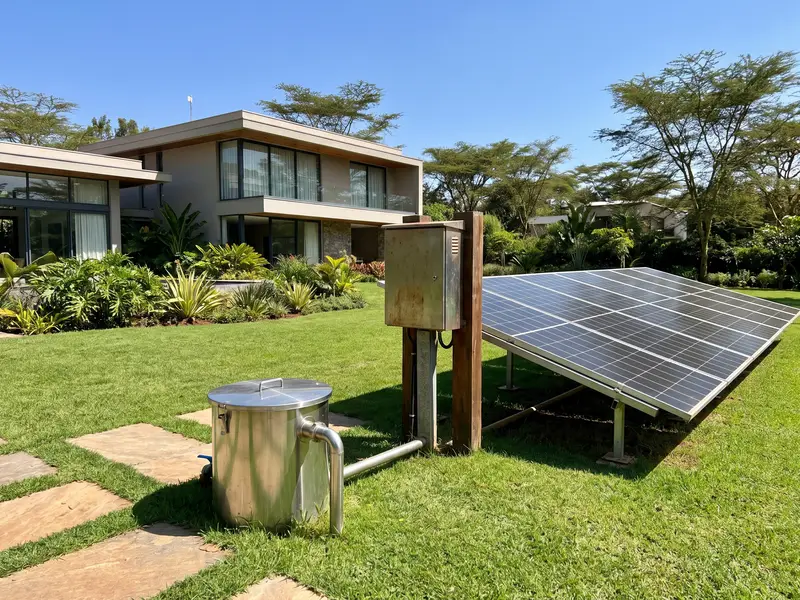
- Surface pumps draw from a river, dam, pond or shallow well, usually up to about 7 metres below the pump. They are portable and often the cheapest way to irrigate a small farm.
- Submersible pumps go down a borehole or deep well. Use one where the water is deeper. See solar borehole pumps.
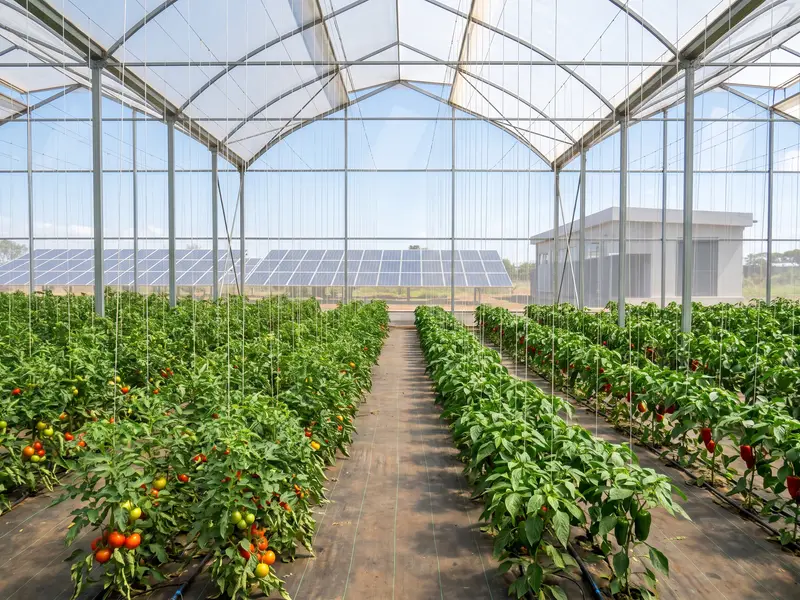
- Larger AC pumps on a pumping inverter suit bigger farms, greenhouses and estates.
Match the delivery method too. Drip irrigation puts water at the roots, uses much less water and needs only low pressure, so a smaller pump can cover more ground. Sprinklers need more pressure and flow. Many small farms start with drip from a raised tank.
Sizing a solar irrigation system
- Area and crop. How many acres, and what you grow. Vegetables in the dry season need far more water than a maize field in the rains.
- Water source. Its depth or distance, and how much it can supply without running dry.
- Head. The height from the water to the tank or highest field, plus pipe friction.
- Daily water need. Your installer or an agronomist can estimate it from crop and area.
From these the installer picks the pump and the panels. Ask for the expected litres per day at your head, not just the pump's wattage.
Solar irrigation in Kenya: what it costs
Small DC pumps cost about KSh 9,400 alone or about KSh 19,000 as a kit with a panel, and basic 12V DC surface pumps about KSh 5,000 to 7,000. They suit a kitchen garden or a small plot. Submersible pumps of 370 to 800W are typically about KSh 38,000 before panels, and engineered Lorentz systems typically about KSh 195,000.
Farm kits on lipa mdogo mdogo. SunCulture sells irrigation kits on instalments. Its published plans include:
- ClimateSmart Direct (submersible, up to about 1 acre): KSh 3,499 deposit and KSh 2,659 a month for 24 months, about KSh 67,300 in total, or KSh 44,999 cash.
- Solar Surface Pump (up to about 2 acres): KSh 4,499 deposit and KSh 3,529 a month for 24 months, about KSh 89,200 in total, or KSh 59,999 cash.
Plan prices change, so confirm the price with SunCulture before paying. See solar water pump prices for every plan and pump type.
Getting more from your solar pump
- Put the panels where nothing shades them and clean off dust regularly.
- Use a tank big enough to hold at least a day's water.
- Fit a filter before drip lines so they do not block.
- Pump in the day, irrigate in the cool hours, so less water evaporates.
The same sun can also dry your harvest: see solar dryers. For how pumps work in general, see the solar water pumps guide.