What it costs
| Size / type | Typical price | Range |
|---|---|---|
| 56 eggs | KSh 11,399 | 10,500 – 11,499 |
| 64 eggs | KSh 11,999 | 10,500 – 29,000 |
| 128 eggs | KSh 15,499 | 10,500 – 37,999 |
| 192 eggs | KSh 19,500 | 13,799 – 28,499 |
| 256 eggs | KSh 24,500 | 21,499 – 26,000 |
| 264 eggs | KSh 178,500 | 178,500 – 178,500 |
| 320 eggs | KSh 19,500 | 19,500 – 28,999 |
| incubator (capacity not stated) | KSh 22,000 | 12,999 – 55,000 |
| incubator + solar kit bundles | KSh 41,999 | 28,499 – 75,700 |
Most are AC/DC 'solar-ready' incubators. The panel and battery are not included unless the row says it is a bundle. Prices are approximate and vary by brand and seller.
Solar egg incubator prices in Kenya
The incubator alone typically sells for:
- about KSh 11,400 for 56 eggs;
- about KSh 12,000 for 64 eggs;
- about KSh 15,500 for 128 eggs;
- about KSh 19,500 for 192 eggs;
- about KSh 24,500 for 256 eggs.
The number of eggs is the main thing that drives the price. Incubators sold with a solar kit (panel and battery) typically cost about KSh 42,000, from about KSh 28,500 to KSh 75,700.
Most incubators sold as "solar" are AC/DC solar-ready: they run on mains power or on 12V from a battery. The panel and battery are not in the box unless the seller says so. Check before you compare prices.
Why the battery matters more than the panel
Chicken eggs take about 21 days to hatch. Through all of that time they must stay close to the right temperature and humidity, and be turned regularly. A few hours of cold during a power cut can ruin a whole batch.
The incubator works hardest at night, when the air is cool and the sun is gone. So:
- The battery must run the incubator from evening to morning, and ideally through a cloudy day or two.
- The panel must refill that battery and run the incubator during the day.
Find the incubator's power in watts on its label. Its heater switches on and off, so its average use is lower than its rating, but size the battery with a good margin. An installer can measure the real use and size the solar battery and panel for you.
Choosing the right solar incubator
- Capacity. Match it to your flock and your market. A half-empty large incubator wastes power; a full small one limits your hatch.
- Automatic turning. Saves you turning eggs by hand several times a day.
- Accurate thermostat and humidity display. Cheap sensors can be off by enough to spoil a hatch.
- Automatic switch to battery. Some incubators switch from mains to battery by themselves when power goes.
- Spare parts and support. A fan or heater failing mid-hatch is costly. Buy from a seller who stocks parts.
Keep the incubator in a room with steady temperature, out of direct sun and drafts.
Solar incubators for hatching eggs: a simple setup
A typical small setup for a 64 to 128 egg incubator looks like this:
- The incubator, AC/DC, set to run on 12V.
- A deep-cycle battery sized for the incubator's night-time use plus a margin for cloudy days.
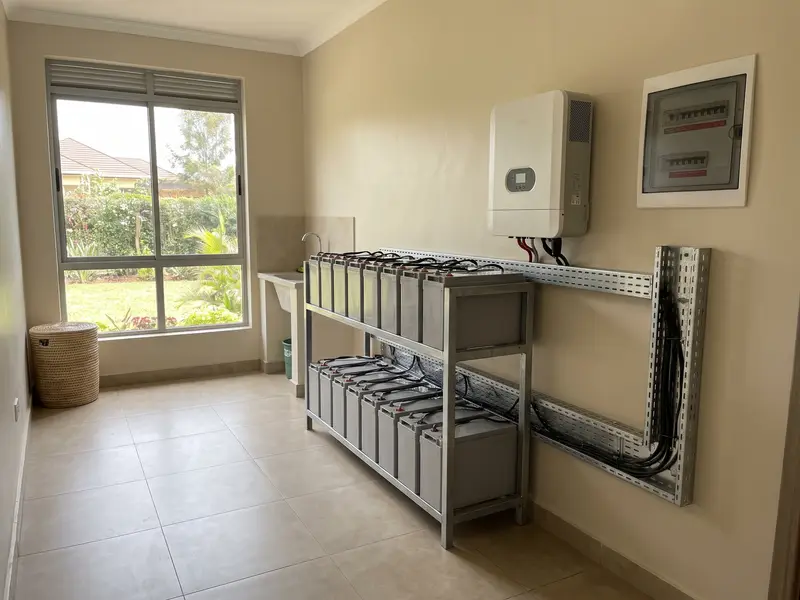
- A charge controller between the panel and the battery, so the battery is not overcharged or drained flat.
- A panel big enough to refill the battery and run the incubator by day.
Some incubators switch to the battery by themselves when mains power fails, so you can keep using KPLC power where you have it and let solar cover the gaps. Others run on the battery all the time. Either way, test the full setup for a day or two with no eggs inside before you start a batch.
Running an incubator on your home solar system
If you already have a home solar system with a battery, it can often run an incubator too, as long as the battery has room for the extra night-time load. Ask your installer to check before you start a batch.
For larger poultry units, it can make sense to put the incubators, brooder lights and water pump on one planned system. See home solar systems and solar irrigation for the farm side.