EcoFlow price in Kenya by model
Approximate prices for each EcoFlow portable power station, without a solar panel:
- River 3 (245Wh, 300W): about KSh 35,000, roughly KSh 32,500 to KSh 45,000.
- River 2 (256Wh, 300W): about KSh 37,000, roughly KSh 34,000 to KSh 40,000.
- River 3 Plus (286Wh, 600W): about KSh 41,500.
- River 2 Max (512Wh, 500W): about KSh 52,000, roughly KSh 43,000 to KSh 60,000.
- River 2 Pro (768Wh, 800W): about KSh 59,000.
- E980 (980Wh, 500W): roughly KSh 56,500 to KSh 67,000.
- Delta 3 (1,024Wh, 1,800W): about KSh 96,000.
- Delta 2 (1,024Wh, 1,800W): about KSh 108,000.
- Delta 3 Max (2,048Wh, 2,400W): about KSh 147,000.
- Delta 2 Max (2,048Wh, 2,400W): about KSh 204,000.
- Delta Pro (3,600Wh, 3,600W): roughly KSh 290,000 to KSh 465,000.
- Delta Pro 3 (4,096Wh, 4,000W): about KSh 460,000.
Prices move with stock and exchange rates, so treat these as a guide. All the current River and Delta models above use LiFePO4 cells. For how EcoFlow compares with other brands, see our portable power station guide.
EcoFlow River 2, River 2 Pro, River 2 Max and River 3
The River series is EcoFlow's small range. Each charges from a wall socket in about an hour.
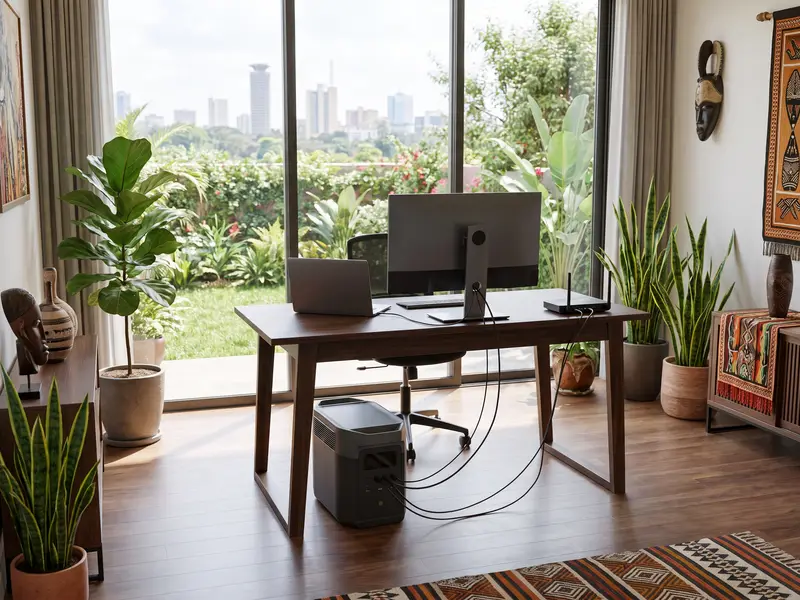
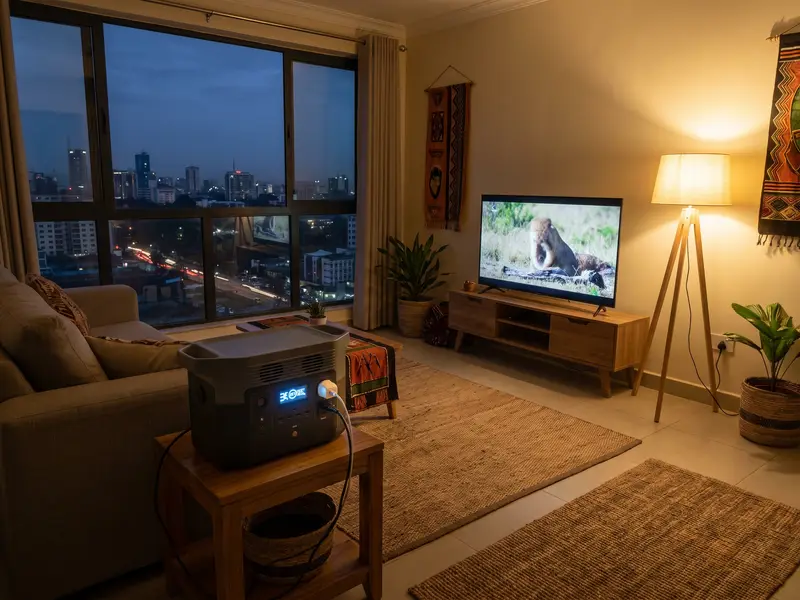
EcoFlow River 2 and River 3 (about 250Wh, 300W) suit a router, phones, a laptop and a few LED bulbs. A 12W router alone runs for roughly 18 hours. Lights, a router and a 50W TV together (about 110W) run for around 2 hours. They are too small to start most fridges. The River 3 Plus adds 600W output and a little more capacity.
EcoFlow River 2 Max (512Wh, 500W) doubles the storage. It runs the same 110W evening load for about 4 hours, or a laptop through a full working day.
EcoFlow River 2 Pro (768Wh, 800W) is the most useful River for a Kenyan home. It covers lights, router, TV and fan for about 6 hours and can usually start a small efficient fridge, running it for several hours. EcoFlow's X-Boost mode lets some heating appliances run at reduced power, but not a full iron box or kettle.
EcoFlow Delta 2 and Delta 2 Max for longer blackouts
EcoFlow Delta 2 (1,024Wh, 1,800W) is the step up for whole evenings without KPLC. It runs lights, router, TV and fan (about 110W) for around 8 hours. It can also run a small fridge for most of a day, or briefly power a microwave or a small iron box within its 1,800W limit. Add an EcoFlow extra battery (about KSh 121,000) to double the storage.
EcoFlow Delta 2 Max (2,048Wh, 2,400W) doubles the capacity again. It runs a small fridge, lights, router and TV through a long blackout and accepts up to about 1,000W of solar. It is expensive for its size, and the newer Delta 3 Max (about KSh 147,000) offers similar capacity for less. The Delta 3 (about KSh 96,000) matches the Delta 2 on paper for a little less money.
EcoFlow Delta Pro and Delta 3 for home backup
EcoFlow Delta Pro (3,600Wh, 3,600W) is built for home backup: it runs most household loads apart from water heaters, and can be expanded with extra batteries. At roughly KSh 290,000 to KSh 465,000, it costs as much as a fixed home system with more storage. The Delta Pro 3 (4,096Wh, 4,000W) is about KSh 460,000.
The Delta 3 family sits between the Delta 2 and the Delta Pro. The standard Delta 3 matches a Delta 2 for everyday blackouts. The Delta 3 Max gives 2kWh for long evenings and a fridge.
EcoFlow solar panels to pair
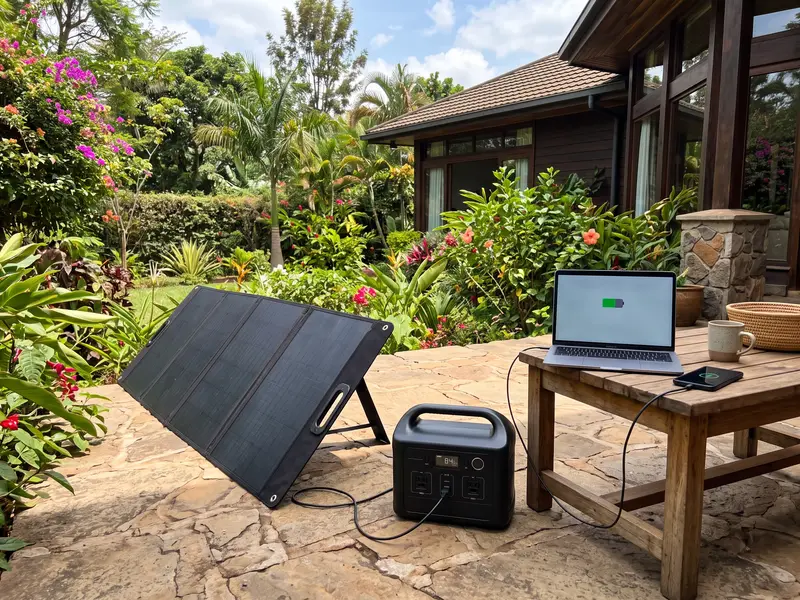
An EcoFlow solar panel folds flat and plugs straight into the power station. Approximate prices:
- 45W: about KSh 8,000.
- 60W: about KSh 15,000.
- 100W flexible: about KSh 15,000.
- 110W portable: about KSh 28,000.
- 160W portable: roughly KSh 27,000 to KSh 37,000.
- 220W portable: about KSh 53,000.
- 400W portable: roughly KSh 63,500 to KSh 86,000.
Match the panel to the unit's solar input. A River 2 accepts about 110W, a River 2 Pro or River 2 Max about 220W, and a Delta 2 up to about 500W. Bundles are also sold, for example the River 3 with a 110W panel at about KSh 46,500.
Any panel with the right voltage and connector will work, and a standard rigid panel costs far less per watt. See solar generators for cheaper panel kits.
Buying genuine EcoFlow stock and warranty
EcoFlow is popular, so copies and grey imports turn up. To protect yourself:
- Ask for a receipt and the serial number, and register the unit in the EcoFlow app when you first set it up.
- Check the warranty terms with the seller in writing: how long it lasts in Kenya and who handles a repair.
- Buy the UK or 230V version. Kenya uses the same sockets as the UK. US versions give 120V and will not run Kenyan appliances properly.
- Be wary of prices far below the figures above, or of model names EcoFlow does not use.
EcoFlow or a home solar system?
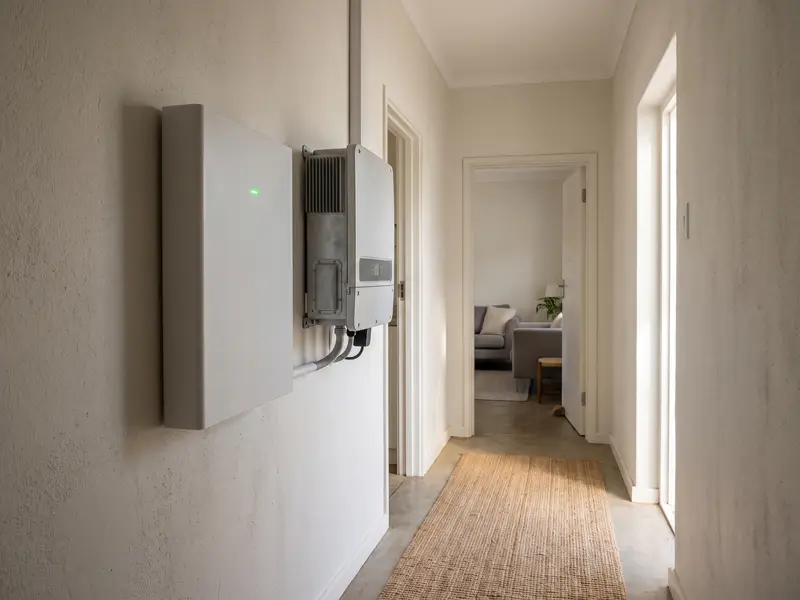
An EcoFlow is quick to set up, works in a rental house and goes with you when you move. But per kWh it costs much more than a fixed system. A Delta 2 Max stores about 2kWh for around KSh 204,000, while a fixed lithium solar battery of about 5kWh typically costs about KSh 110,000, though it also needs an inverter, panels and installation.
If you want to run most of the house every day, or a fridge day and night, a home solar system is the better buy. Send one request and up to 3 licensed installers will quote.