Why the small parts matter
A good panel, battery and inverter can be let down by a thin cable, a loose connector or a missing breaker. Undersized DC cables waste power as heat and, at worst, start fires. Loose connectors on the roof corrode and fail. Without proper protection, a short circuit on a battery cable can release a huge current in an instant.
Most of these parts cost little compared with the panels and batteries, so this is the wrong place to save. When you compare quotes, check that each one lists them.
Solar cables: types and sizes
- PV cable (solar DC cable). Runs from the panels to the controller or inverter. Use proper UV-resistant, double-insulated solar cable rated for DC, not ordinary house wire, which cracks in the sun.
- Battery cable. Short, thick cable between the batteries and the inverter. It carries the largest currents in the system.
- AC cable. From the inverter to your distribution board, sized like normal house wiring.
Cable size depends on the current and the length of the run. In general:
- 4mm² and 6mm² solar cable is common for panel strings on homes. 6mm² is the safer choice for longer runs or higher currents.
- 10mm² and above is used for long runs, combined strings and larger systems.
- Battery cables on 12V and 24V inverters are much thicker, often 25mm² to 50mm² or more, because the current at low voltage is high.
Keep voltage drop low (installers often aim for a few percent or less). We did not collect prices for 6mm² or 10mm² solar cable, so ask for the cable size and length to be listed on your quote.
DC circuit breakers, fuses and the combiner box
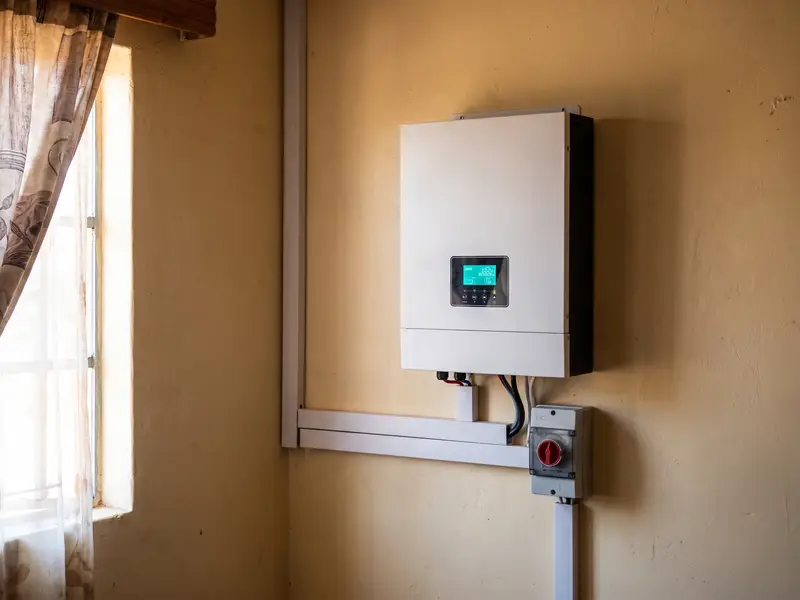
- DC circuit breakers for solar isolate the panels and the battery so the system can be worked on safely. They must be rated for DC at your system voltage: an AC breaker may not break a DC arc.
- Battery fuse or breaker. Placed close to the battery positive terminal. It protects the cable if anything shorts.
- Solar combiner box. Joins several panel strings into one feed, with a fuse or breaker on each string and often a surge protector. Used when you have more than two strings.
- Surge protection device (SPD). Protects the inverter from lightning surges on the panel and AC sides. Worth having in most of Kenya.
- Earthing. Panel frames, mounting rails and the inverter should be bonded to a proper earth.
MC4 connectors for solar panels
MC4 connectors are the standard plugs on panel leads. They click together and seal against water and dust. Two points matter:
- Crimp them properly with an MC4 crimping tool, not pliers. A badly crimped connector heats up and can melt.
- Use matching connectors. Mixing different makes can leave a poor seal or a loose contact.
Branch connectors (Y-connectors) let you join panels in parallel without a combiner box on small systems.
Solar rails and mounting
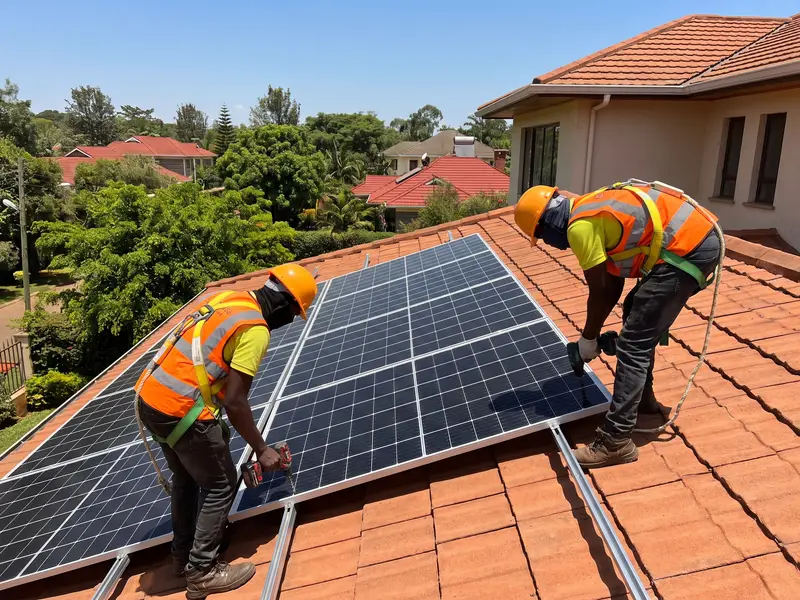
Solar rails and clamps hold the panels to the roof or a ground frame. Aluminium rails with stainless steel bolts last well, especially near the coast. Mounting kits differ for iron-sheet (mabati), tile and concrete roofs, and for ground mounts.
Panels should be tilted to drain rain and dust and face roughly north or south depending on where you are; near the equator a low tilt is common. Ask your installer how the frame is fixed to the roof and how leaks are prevented. We did not collect prices for solar mounting rails in Kenya, so ask for them to be listed on your quote.
What a complete accessories list looks like
A home system quote should list:
- PV cable size and length, and battery cable size;
- MC4 connectors, and branch connectors if used;
- DC breakers or isolators for the panels and the battery;
- a battery fuse;
- a combiner box if there are several strings;
- surge protection and earthing;
- mounting rails, clamps and roof fixings;
- AC breaker and changeover where the system meets your house wiring.
A licensed installer will size all of this for you. See solar installation, the solar wiring diagram, and charge controllers for how the parts fit together.